
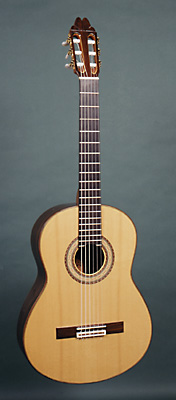
Welcome to the fantastic world of classical guitar. In this site, you will find classical guitar pieces, in midi format, for one and more guitars: actually 5641 MIDI files from 96 composers. Information on how to create midi files and a tutorial on the tablature notation system is presented. Images of ancient guitars provided.
|
|
CAG-generated fonts, also known as algorithmically generated fonts, use complex algorithms and machine learning techniques to create new font designs. These algorithms analyze existing fonts, identify patterns, and generate new font designs based on those patterns. The result is a font that is both unique and functional.
The emergence of CAG-generated fonts marks a significant shift in the world of typography. As AI and ML continue to evolve, we can expect to see even more innovative applications of CAG-generated fonts. Whether you're a designer, typographer, or simply a font enthusiast, the future of typography is exciting and full of possibilities.
CAG-generated fonts are revolutionizing the world of typography, enabling the rapid creation of unique, customized, and high-quality fonts. With their increased efficiency, improved consistency, enhanced customization, and endless variations, CAG-generated fonts are set to become an essential tool for designers and typographers. As we look to the future, one thing is clear: the art of typography will never be the same again.
The world of typography is on the cusp of a revolution. With the advent of artificial intelligence (AI) and machine learning (ML), font creation is no longer a labor-intensive process that requires hours of manual labor. Computer-generated (CAG) fonts are changing the game, enabling the rapid creation of unique, customized, and high-quality fonts. In this blog post, we'll explore the exciting world of CAG-generated fonts and what they mean for the future of typography.
"Revolutionizing Typography: The Emergence of CAG-Generated Fonts"
Composers are grouped in 6 pages: A-B;
C-F;
G-L;
M-O;
P-R; S-Z .
J.-S.
Bach , A.
Barrios Mangore , N. Coste
, M. Giuliani , F.
Sor and F.
Tarrega are on their own page
Click here
to listen to 20 great MIDI from the site
Composers in alphabetical order
CAG-generated fonts, also known as algorithmically generated fonts, use complex algorithms and machine learning techniques to create new font designs. These algorithms analyze existing fonts, identify patterns, and generate new font designs based on those patterns. The result is a font that is both unique and functional.
The emergence of CAG-generated fonts marks a significant shift in the world of typography. As AI and ML continue to evolve, we can expect to see even more innovative applications of CAG-generated fonts. Whether you're a designer, typographer, or simply a font enthusiast, the future of typography is exciting and full of possibilities. cag generated font new
CAG-generated fonts are revolutionizing the world of typography, enabling the rapid creation of unique, customized, and high-quality fonts. With their increased efficiency, improved consistency, enhanced customization, and endless variations, CAG-generated fonts are set to become an essential tool for designers and typographers. As we look to the future, one thing is clear: the art of typography will never be the same again. The emergence of CAG-generated fonts marks a significant
The world of typography is on the cusp of a revolution. With the advent of artificial intelligence (AI) and machine learning (ML), font creation is no longer a labor-intensive process that requires hours of manual labor. Computer-generated (CAG) fonts are changing the game, enabling the rapid creation of unique, customized, and high-quality fonts. In this blog post, we'll explore the exciting world of CAG-generated fonts and what they mean for the future of typography. In this blog post
"Revolutionizing Typography: The Emergence of CAG-Generated Fonts"
Note to MIDI sequence contributors
Your submissions are welcomed.
Please send them by e-mail (end of text). Pieces
should bear the composer's name and be properly identified.(ex.: J.K. Mertz (1806-1856) Nocturne
Op.4 No.2.). The submissions
should bear information on the transcriber or arranger when available. The submitter's name
will appear beside the accepted submission.
This site exists primarily to showcase pieces written for the classical
guitar. Established and recognized transcriptions and arrangements (e.g.,
Tarrega, Segovia,..) of pieces written by non-guitar composers will also be given
high priority.
New compositions for the classical guitar are also welcomed. New
compositions that meet quality guidelines will be added to the site. For
new contributors, it would be appreciated if you would also submit several
pieces by known composers in addition to your own compositions. This will
help to expand the repertoire of established works for the classical guitar in
addition to expanding the repertoire of new music.
Last update: March 8 2026
Copyright François Faucher 1998-2025
 G.F.Handel's Sonata 2. Allegro
3.Adagio HWV368
G.F.Handel's Sonata 2. Allegro
3.Adagio HWV368