AVOTIGERTOUCH2
AVOLITES
discontinued

Tiger Touch II

ORDER CODE: AVOTIGERTOUCH2

Now boasting a 100% brighter screen, increased processing power, and faster graphics engine, the Tiger Touch II is the most specified Titan console.
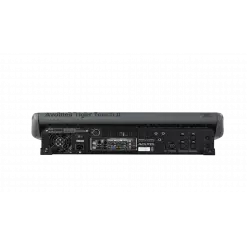
The Avolites Tiger Touch II represents the perfect combination of power and portability. This third-generation console is packed with enough power for complex shows, yet small and light enough to fly in standard hold luggage. The console features SMPTE timecode support and a redesigned button layout to match the entire Titan range.
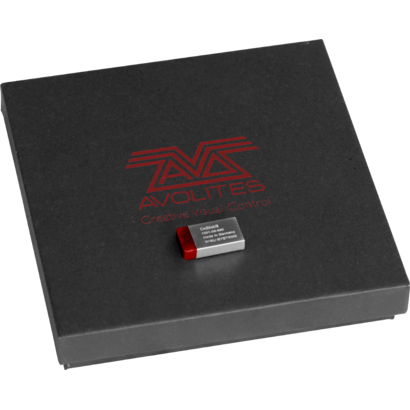
In order to update the console to version 12 of the Titan, it will be necessary to purchase and install a USB dongle called AVOKEY.
Serial 02006 - 03065
You need to order:
- AVOKEYINT 
- 1x5 way to USB-A Cable (spare part code 8000-6102)
Once you've received your AVOKEYINT and 1x5 way to USB-A Cable, you will be required to connect the USB-A Cable to the motherboard. This cable will provide an additional USB port for the AvoKey.
Click here to view the installation guide: https://www.avolites.com/Portals/0/Downloads/Manuals/AvoKey/8000-6102 TT2-2-3K AVOKEY upgrade with 1808-0028.pdf
 
Serial 03066 - 4020

You need to order only AVOKEYINT
Once you've received your AVOKEYINT, you will be required to connect this directly to the available (Blue) USB port inside the console (on the motherboard).
Click here to view the installation guide: https://www.avolites.com/Portals/0/Downloads/Manuals/AvoKey/8000-6101 TT2 AVOKEY no cable.pdf
 
Serial 04021 - 05001
You need to order only AVOKEYINT
Once you've received your AVOKEYINT, you will be required to connect this directly to the available (Red) USB port inside the console (on the motherboard).
 
Serial 5001 and above include a factory fitted AvoKey.
Therefore, you do not need to purchase an AvoKey. Imagine a collection of short pieces under this banner

Main features:

  • 10 pageable playbacks, 60 pages.
  • 10 static playbacks - perfect for instant access.
  • 100% brighter 15.6" screen.
  • Three metal shaft optical encoders offering luxurious precision.
  • MIDI support for MIDI Notes and MIDI Timecode.
  • Built in UPS.
  • 4 physical DMX outputs, up to 16 over ArtNet or sACN - 8192 channels.
  • Supports Titan Network Processors for DMX expansion up to 64 universes.
  • Trigger inputs.
  • Dual Ethernet port.
  • Expand your control surface through wings, DMX In or MIDI.
  • Dedicated cue stack control.
  • Support for external touch screen.
  • 10 programmable executor buttons.
  • Conveniently accessible front loading USB.
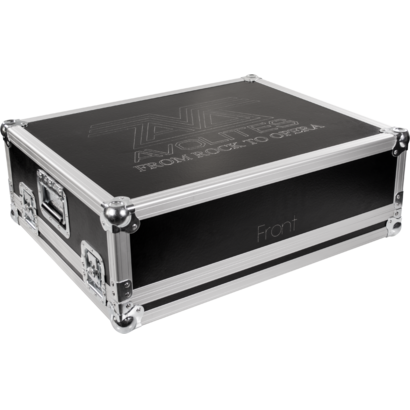
  • Dimensions (WxHxP): 675x435x147 mm (console only); 750x620x300 mm (console in flight case).
  • Weight: 15.2 kg (console only); 29.40 kg (console in flight case); 31.70 kg (console packed in flight case).
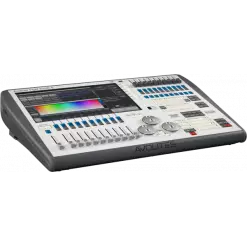
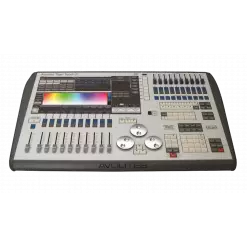
PHOTO GALLERY

Technical specifications

Versions

Accessories & Related Products

AVOKEYINT
AVOKEYINT
(Optional)
AvoKey internal (red)
AVOTT2FC
AVOTT2FC
(Optional)
Avolites TigerTouch II Case

%e0%b4%ae%e0%b4%b2%e0%b4%af%e0%b4%be%e0%b4%b3%e0%b4%82 Kambikathakal Page

Imagine a collection of short pieces under this banner. One story lingers in a Kerala village where old coconut trees shadow a low house and a phone line—thin, frayed—dangles from the pole to a verandah. The wire hums with gossip as much as it carries voice, and the villagers' lives are transmitted in the static between words: a marriage arranged, a son who left for the Gulf and never returned, a neighbor’s quiet act of sacrifice. Another story shifts to a city flat where fiber-optic cables pulse with invisible lives—online marketplaces, YouTube dreams, and long-distance love—revealing new forms of belonging and alienation. In both, the "kambi" is literal and symbolic: the literal wire or cable that connects devices and homes, and the unseen ties—obligation, memory, shame, affection—that stitch people together.

Thematically, kambikathakal could interrogate migration and return, tradition and transformation, intimacy and distance. Kerala's long history of labor migration—to the Gulf, to distant cities—makes it a landscape of departures and remittances, where economic lifelines are also moral and emotional ties. Stories might examine how remittance money rewrites family hierarchies, how WhatsApp images recast memory, or how temple rituals coexist uneasily with satellite TV. There is space for quiet resistance: characters who rebuild community through shared labor, who preserve endangered dialects by telling children tales in the old tongue, or who repurpose the very wires of modernity for grassroots solidarity.

Finally, as a collection, "മലയോളം kambikathakal" would resonate by balancing the particular and the universal. Rooted in Kerala’s landscapes and languages, the stories would still speak to anyone who has experienced the tension of ties—the invisible cables that carry voice and obligation, memory and money, love and constraint. They would celebrate resilience and nuance: the ordinary acts of care that bind communities, even as new wires—literal and figurative—rewrite the map of belonging.

Economically and politically, kambikathakal can also be pointed without being didactic: a story about an electrician who must choose between safety standards and quick fixes for poor customers can illuminate systemic inequality; a tale about a coastal hamlet confronting erosion and uncertain land rights can show how climate and policy intersect the personal. The essays could weave reportage-like detail with lyrical reflection, a hybrid form that honors both facts and feeling.

Info Request

Imagine a collection of short pieces under this banner. One story lingers in a Kerala village where old coconut trees shadow a low house and a phone line—thin, frayed—dangles from the pole to a verandah. The wire hums with gossip as much as it carries voice, and the villagers' lives are transmitted in the static between words: a marriage arranged, a son who left for the Gulf and never returned, a neighbor’s quiet act of sacrifice. Another story shifts to a city flat where fiber-optic cables pulse with invisible lives—online marketplaces, YouTube dreams, and long-distance love—revealing new forms of belonging and alienation. In both, the "kambi" is literal and symbolic: the literal wire or cable that connects devices and homes, and the unseen ties—obligation, memory, shame, affection—that stitch people together.

Thematically, kambikathakal could interrogate migration and return, tradition and transformation, intimacy and distance. Kerala's long history of labor migration—to the Gulf, to distant cities—makes it a landscape of departures and remittances, where economic lifelines are also moral and emotional ties. Stories might examine how remittance money rewrites family hierarchies, how WhatsApp images recast memory, or how temple rituals coexist uneasily with satellite TV. There is space for quiet resistance: characters who rebuild community through shared labor, who preserve endangered dialects by telling children tales in the old tongue, or who repurpose the very wires of modernity for grassroots solidarity.

Finally, as a collection, "മലയോളം kambikathakal" would resonate by balancing the particular and the universal. Rooted in Kerala’s landscapes and languages, the stories would still speak to anyone who has experienced the tension of ties—the invisible cables that carry voice and obligation, memory and money, love and constraint. They would celebrate resilience and nuance: the ordinary acts of care that bind communities, even as new wires—literal and figurative—rewrite the map of belonging.

Economically and politically, kambikathakal can also be pointed without being didactic: a story about an electrician who must choose between safety standards and quick fixes for poor customers can illuminate systemic inequality; a tale about a coastal hamlet confronting erosion and uncertain land rights can show how climate and policy intersect the personal. The essays could weave reportage-like detail with lyrical reflection, a hybrid form that honors both facts and feeling.


Subscribe to our Newsletter

Loading...