Returnal Repack Full Review

Returnal Repack: Where Tedium Meets Brilliance

Returnal’s repacks aim to condense Housemarque’s punishing, loop-driven shooter into a single-download trophy for preservationists and speedrunners. On the surface they’re practical: bundled patches, DLC, performance tweaks, and mods that smooth textures or unlock framerates. But the repack phenomenon reveals something deeper about how players relate to difficult games. returnal repack full

Repacks also sit at an uneasy intersection of preservation and piracy. They preserve a snapshot of a game’s state and community patches that might otherwise vanish, yet they often circulate outside official channels. For modders and historians, a well-documented repack is a cultural artifact; for developers, it’s a reminder of the tension between control and community stewardship. Repacks also sit at an uneasy intersection of

Here’s a concise, engaging short piece about Returnal Repack (full): Here’s a concise, engaging short piece about Returnal

Ultimately, the “full” Returnal repack is symbolic: it’s not just a complete package of files, but a statement about player priorities—efficiency, accessibility, nostalgia, or fidelity to intent. Whether you see it as salvation or sacrilege depends on whether you prize the ride or the destination.

The original Returnal is a study in deliberate friction—its roguelike loops, oppressive atmosphere, and abrupt deaths force players to relearn, adapt, and accept loss as part of progress. A repack promises convenience: fewer installs, faster boots, sometimes unlocked content. That convenience can be liberating—letting players focus on mastery, experimentation, or narrative beats rather than patch-hunting. For others, it risks hollowing the struggle that gives Returnal its identity; bypassing unlock gates or quality-of-life restrictions can erode the emotional payoff of beating an uncompromising loop.
Command line utility

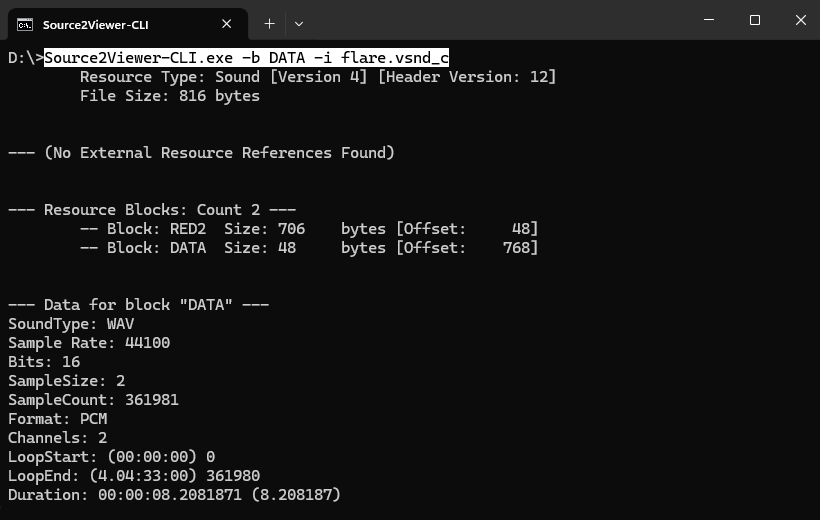
A cross-platform console application that can export and decompile Source 2 resources similar to the main application.

ValveResourceFormat

.NET library that powers Source 2 Viewer (S2V), also known as VRF. This library can be used to open and extract Source 2 resource files programmatically.

ValveResourceFormat.Renderer

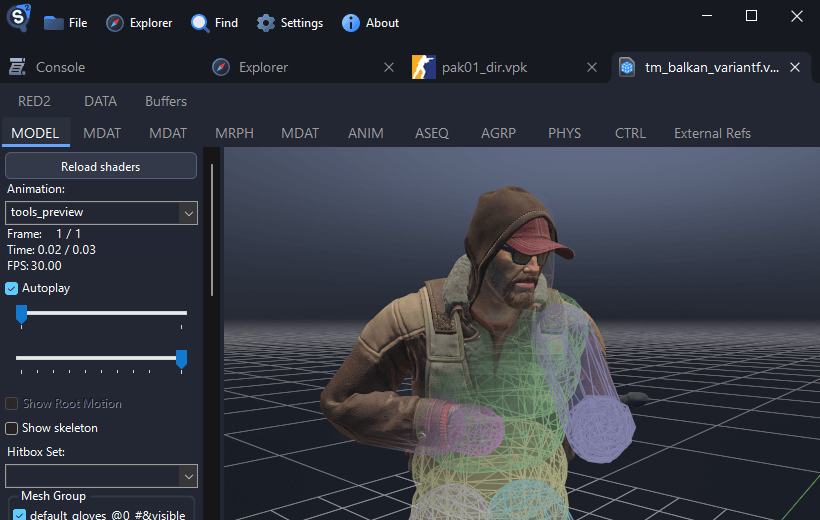
.NET library providing an OpenGL-based rendering engine for Source 2 assets. Standalone rendering of models, maps, particles, animations, lighting, and materials with physically-based rendering (PBR).

ValvePak

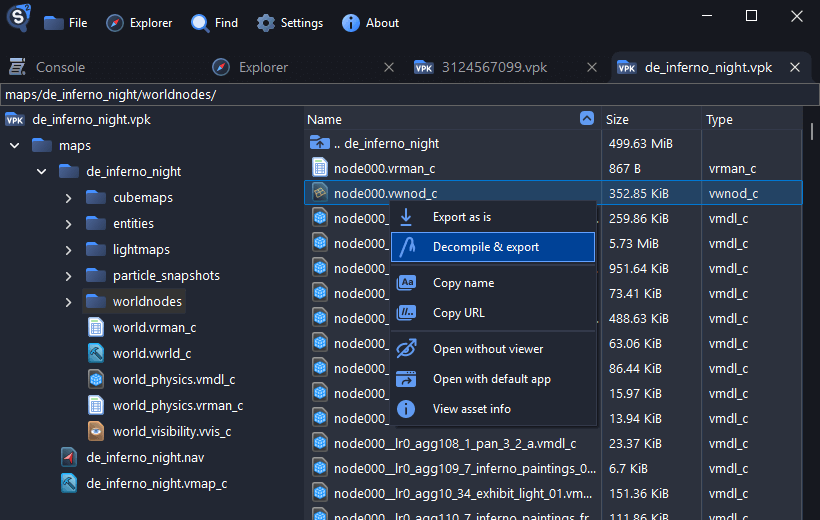
.NET library to read Valve Pak (VPK) archives. VPK files are uncompressed archives used to package game content. This library allows you to read and extract files out of these paks.

ValveKeyValue

.NET library to read and write files in Valve key value format. This library aims to be fully compatible with Valve's various implementations of KeyValues format parsing.

C#
// Open package and read a file
using var package = new Package();
package.Read("pak01_dir.vpk");

var packageEntry = package.FindEntry("textures/debug.vtex_c");
package.ReadEntry(packageEntry, out var rawFile);

// Read file as a resource
using var ms = new MemoryStream(rawFile);
using var resource = new Resource();
resource.Read(ms);

Debug.Assert(resource.ResourceType == ResourceType.Texture);

// Get a png from the texture
var texture = (Texture)resource.DataBlock;
using var bitmap = texture.GenerateBitmap();
var png = TextureExtract.ToPngImage(bitmap);

File.WriteAllBytes("image.png", png);
View API documentation
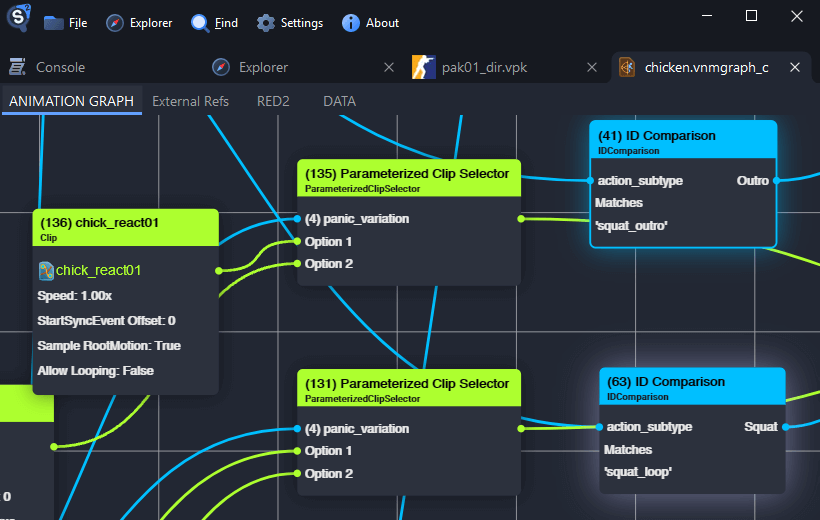
Screenshot of the 3D renderer displaying a Counter-Strike 2 player model on a grid Screenshot showing the VPK package explorer interface with a file tree and a list view Screenshot of the animation graph viewer showing nodes Screenshot of the command line interface showing DATA block for an audio file

Returnal Repack: Where Tedium Meets Brilliance

Returnal’s repacks aim to condense Housemarque’s punishing, loop-driven shooter into a single-download trophy for preservationists and speedrunners. On the surface they’re practical: bundled patches, DLC, performance tweaks, and mods that smooth textures or unlock framerates. But the repack phenomenon reveals something deeper about how players relate to difficult games.

Repacks also sit at an uneasy intersection of preservation and piracy. They preserve a snapshot of a game’s state and community patches that might otherwise vanish, yet they often circulate outside official channels. For modders and historians, a well-documented repack is a cultural artifact; for developers, it’s a reminder of the tension between control and community stewardship.

Here’s a concise, engaging short piece about Returnal Repack (full):

Ultimately, the “full” Returnal repack is symbolic: it’s not just a complete package of files, but a statement about player priorities—efficiency, accessibility, nostalgia, or fidelity to intent. Whether you see it as salvation or sacrilege depends on whether you prize the ride or the destination.

The original Returnal is a study in deliberate friction—its roguelike loops, oppressive atmosphere, and abrupt deaths force players to relearn, adapt, and accept loss as part of progress. A repack promises convenience: fewer installs, faster boots, sometimes unlocked content. That convenience can be liberating—letting players focus on mastery, experimentation, or narrative beats rather than patch-hunting. For others, it risks hollowing the struggle that gives Returnal its identity; bypassing unlock gates or quality-of-life restrictions can erode the emotional payoff of beating an uncompromising loop.
Changelog

Made possible by amazing people

Source 2 Viewer is open-source and built by volunteers. Every contribution helps make it better for everyone.